Free shipping above ₹799 | Our Only Official Number: +91 8348427016

Types of Coffee Beans: The Complete Guide to Arabica, Robusta, Liberica & Excelsa

Coffee Bean Guide · May 2026

Types of Coffee Beans: The Complete Guide to Arabica, Robusta, Liberica & Excelsa

Updated May 2026 · By Saakya · ⏱ 8 min read

Coffee is one of the world’s most nuanced beverages — and it all begins with the bean. Before the roast, before the brew, before the first sip, the type of coffee bean you choose determines nearly everything: the flavour, the body, the acidity, the caffeine, and the story in the cup.

Yet most people buy coffee without knowing which bean they are drinking, let alone why it tastes the way it does. This guide covers everything you need to know about the four main types of coffee beans — Arabica, Robusta, Liberica, and Excelsa — how they compare, and what makes Indian specialty coffee, and specifically Himalayan coffee from Darjeeling and Kalimpong, one of the most exciting emerging origins in the world.

What Are Coffee Beans? (And Why Does the Type Matter?)

Coffee beans are the seeds of the coffee cherry — the fruit of the Coffea plant, grown across tropical regions roughly between the Tropics of Cancer and Capricorn, a belt often called the Coffee Belt. Once harvested, processed, and roasted, these seeds become the aromatic beans you grind and brew.

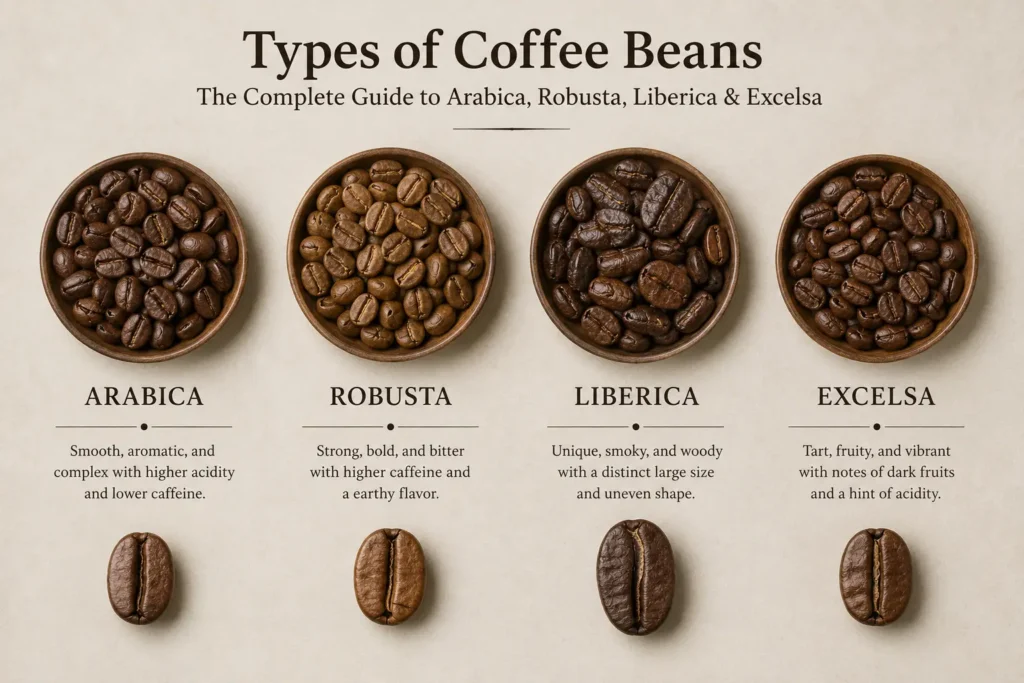
There are over 120 species of coffee plants, but only four are commercially relevant:

☕ Arabica 💪 Robusta 🌿 Liberica ✨ Excelsa
Why the bean type matters
Every step after harvest — processing, roasting, brewing — can only work with what the bean already is. A great roast cannot save a poor-quality bean. The bean is where great coffee begins.
The specialty difference
The difference between mass-market commodity coffee and high-altitude single-origin Arabica is not subtle. It is the difference between coffee as caffeine and coffee as a genuine sensory experience.

1. Arabica Coffee Beans — The Gold Standard of Specialty Coffee

Arabica is the world’s most popular coffee bean, accounting for roughly 60–70% of global production. Originally native to Ethiopia and Yemen, Arabica plants are now grown across Central and South America, East Africa, and increasingly in South and Southeast Asia — including India’s own high-altitude regions.

Arabica thrives at elevations between 600 and 2,000 metres or higher, where cooler temperatures slow bean development and allow flavour complexity to build. The plants are more delicate than Robusta — but the cup quality they produce is unmatched.
😌
Taste
Smooth, sweet, and nuanced with low bitterness
🌸
Aroma
Floral, fruity, nutty — varies by origin and roast
Acidity
Bright and pleasant — adds complexity, not sourness
Caffeine
Lower than Robusta (~1.2% by dry weight)
🫧
Body
Light to medium — clean and refined
🎯
Best for
Specialty coffee, pour-over, espresso, cold brew
Best brewing methods for Arabica: Pour-over (V60, Chemex) — lets nuanced flavours shine · French press — full-bodied but still complex · Espresso — especially for single-origin specialty Arabica · Cold brew — smooth and naturally sweet.
☕ Saakya Himalayan Specialty Coffee — 100% Arabica
Shade-grown at altitude in Darjeeling and Kalimpong. Tasting notes of stone fruit, toasted hazelnuts, and warm spice. Freshly roasted in small batches.
Shop Saakya Coffee →
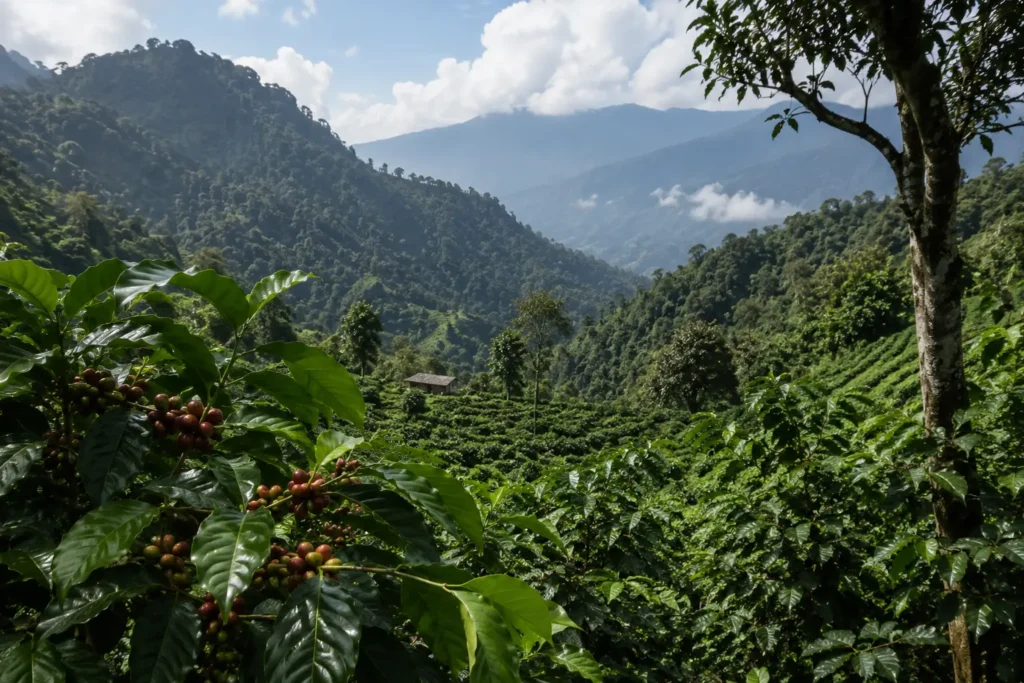
Arabica coffee cherries growing on a Himalayan farm in Darjeeling — Saakya specialty coffee

2. Robusta Coffee Beans — Bold, Bitter & Built for Strength

Robusta is the world’s second most produced coffee, making up roughly 30–40% of global supply. True to its name, the Robusta plant is hardier — more disease-resistant, higher yielding, and able to grow at lower altitudes and higher temperatures than Arabica. In India, Robusta is primarily grown in Karnataka, Kerala, and Andhra Pradesh at lower elevations.

💪
Taste
Strong, bold, and bitter with earthy, grainy, or nutty notes
🌫
Aroma
Heavy and pungent — less delicate than Arabica
Caffeine
Nearly twice Arabica (~2.7%) — delivers a strong kick
🫙
Body
Heavy and dense — produces thick, stable crema in espresso
💰
Price
More affordable — higher yield per plant
🎯
Best for
Espresso blends, instant coffee, budget blends
The honest verdict: Robusta is a workhorse bean. In a well-crafted espresso blend it has its place — but as a single-origin, daily-drinking coffee, it rarely delivers the nuance and pleasure that high-quality Arabica does.

3. Liberica Coffee Beans — Rare, Unusual & Polarising

Liberica accounts for less than 2% of global coffee production. Native to central and west Africa, it is grown today primarily in the Philippines, Malaysia, and parts of Indonesia. It is rarely exported and difficult to source outside Southeast Asia — making it a true niche product.

🌳 Taste
Smoky, woody, and floral — with unusual fruity undertones often described as jackfruit or dark berry.
🎯 Best for
Adventurous coffee drinkers who want something genuinely different. Not a daily-driver bean — but an experience worth trying at least once.

4. Excelsa Coffee Beans — The Blender’s Secret Weapon

Excelsa is technically classified as a variety of Liberica, though it has a distinct enough flavour that many consider it its own category. Like Liberica, it is grown almost exclusively in Southeast Asia and represents well under 1% of global production.

🍒 Taste
Tart, fruity, and slightly dark — with an evolving, layered complexity that sits somewhere between light and dark roast characteristics.
🎯 Best use
Blending — Excelsa adds depth and intrigue to blends that might otherwise be one-dimensional. Rarely sold as a single origin.

Arabica vs Robusta vs Liberica — Quick Comparison

Here is a side-by-side overview of the three main commercial coffee bean types at a glance.

FeatureArabica ⭐RobustaLiberica
TasteSmooth, complex, sweetBold, bitter, earthySmoky, woody, floral
CaffeineLower (~1.2%)Higher (~2.7%)Medium
PricePremiumAffordableRare & niche
Growing AltitudeHigh (600–2,000m+)Low (0–800m)Low to mid
Best ForSpecialty, pour-over, espressoEspresso blends, instantAdventurous drinkers
Global Share~60–70%~30–40%<2%
The bottom line: For flavour, nuance, and a genuinely enjoyable daily cup — Arabica wins. For caffeine intensity in blends and cost efficiency — Robusta has its role. Liberica and Excelsa are worth exploring if you are curious, but they are niche experiences, not everyday choices.
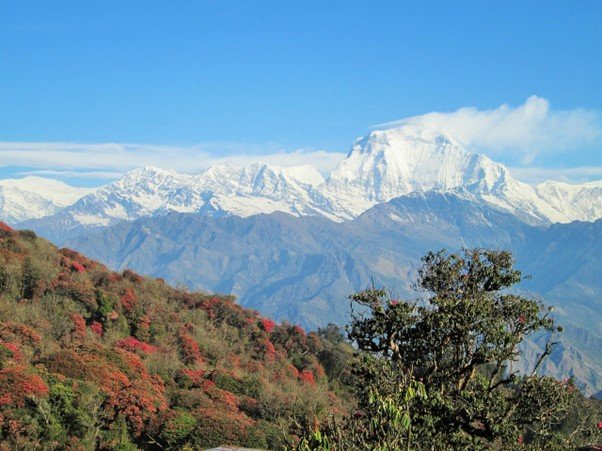
Himalayan coffee farm landscape in Kalimpong Darjeeling — Saakya single origin Arabica

Coffee Beans in India — A Rapidly Evolving Story

India has been growing coffee for over 350 years — primarily in the Western Ghats regions of Karnataka (Coorg, Chikmagalur), Kerala, and Tamil Nadu. These regions produce both Arabica and Robusta at various altitudes and are well-established on the global coffee map.

But India’s most exciting new coffee story is unfolding in the east — in the high-altitude hills of Darjeeling and Kalimpong in West Bengal, where a small movement of pioneering farmers is growing specialty-grade Arabica at elevations above 1,300 metres.

🏔 Himalayan Coffee — India’s Emerging Specialty Origin

The Darjeeling and Kalimpong region has long been famous for tea — but its conditions are equally suited to exceptional Arabica coffee. The combination of high altitude, cool temperatures, misty mountain air, and rich biodiversity creates a microclimate that produces slow-grown beans with remarkable complexity.

Himalayan coffee from Kalimpong has already earned specialty-grade recognition, with cupping scores above 84 from the Coffee Board of India. Tasting notes include mixed berries, plum, jasmine-like florals, stone fruit, and roasted nuts — a profile that stands comfortably alongside established Indian and international specialty origins.

  • High altitude growing — above 1,300 metres — slows bean development, builds complexity
  • Shade-grown — under diverse forest canopy — more sustainable, richer flavour
  • Small-batch, hand-harvested — careful selection at every stage
  • Naturally processed — allows fruit characteristics to develop fully in the bean
  • Pioneer farmers — first-generation growers bringing extraordinary dedication to a new crop
🏔 Saakya Himalayan Specialty Coffee — Sourced Directly from These Farms
Rare, specialty-grade Arabica from Darjeeling and Kalimpong. Traceable to source. Freshly roasted in small batches.
Explore Saakya Coffee →

Coffee Processing Methods — How They Affect Flavour

The way coffee is processed after harvesting dramatically affects the final cup — and is one of the most important factors beyond bean type itself. According to the Specialty Coffee Association, processing method is one of the key variables in a coffee’s final cupping score.
🌞 Natural (Dry) Process
Whole cherries are dried in the sun with the fruit intact. The bean absorbs fruit sugars, resulting in sweeter, fruitier, and more complex flavours. This is how Saakya’s Himalayan coffee is processed.
💧 Washed (Wet) Process
The fruit is removed before drying, resulting in a cleaner, brighter cup where the bean’s inherent terroir characteristics are more prominent.
🍯 Honey Process
A middle path — some mucilage is left on the bean during drying, producing a balanced cup with sweetness from natural processing and clarity from partial washing.
🏔 For Himalayan Arabica
Natural processing suits the fruity, complex profile of high-altitude beans particularly well — allowing the stone fruit and floral notes characteristic of the region to shine through.
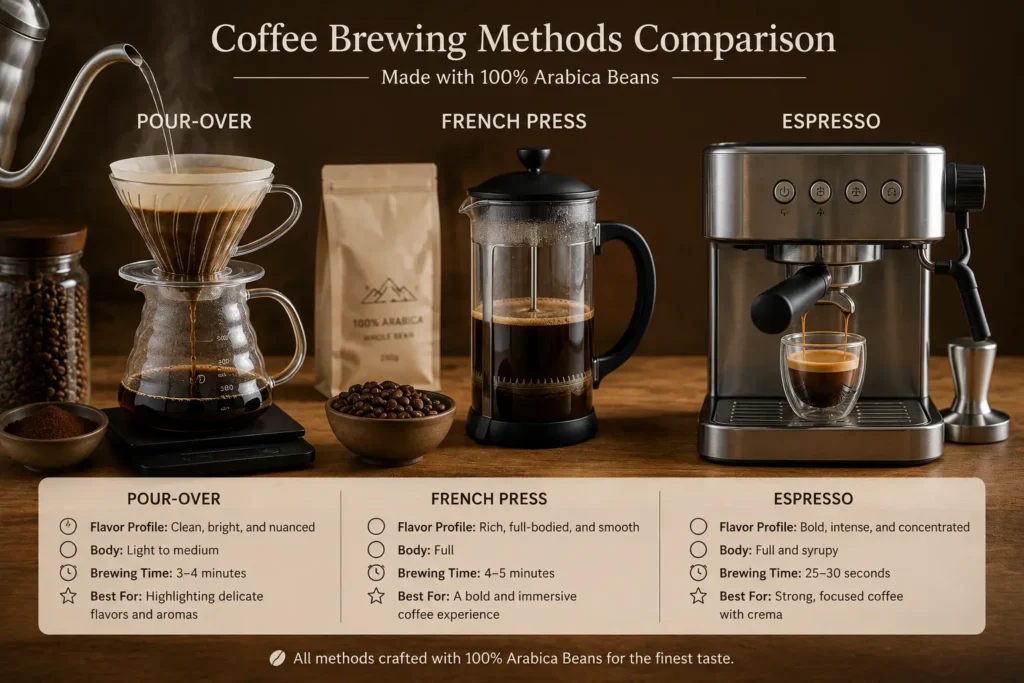
coffee brewing methods comparison — pour-over, French press and espresso with Arabica beans

Whole Bean vs Ground Coffee — Which Should You Buy?

This is one of the most common questions from specialty coffee beginners — and the answer is almost always the same: whole beans.

✅ Why whole beans win
Coffee begins losing aroma and flavour compounds within minutes of grinding. Whole beans preserve them until the moment you brew — delivering a noticeably superior cup every time.
🎯 Grind control
You control the grind size to match your brewing method — espresso (fine), pour-over (medium-fine), French press (coarse), cold brew (coarse).
📅 Longer shelf life
Properly stored whole beans stay fresh for weeks longer than pre-ground — keeping the investment in quality coffee worthwhile.
🫙 When ground is OK
If you do not own a grinder, quality ground coffee from a specialty roaster that grinds fresh to order — like Saakya — is still far superior to mass-market pre-ground.

Choosing Coffee Beans by Brewing Method

Different brewing methods extract different qualities from the same bean. Here is a simple guide to matching your bean and roast to your brewer:

🫗
Pour-Over (V60, Chemex)
Light to medium roast Arabica. Clean, aromatic, highlights terroir. Ideal for Himalayan specialty coffee.
🫙
French Press
Medium roast Arabica. Full-bodied, rich, slightly textured. Coarse grind essential.
Espresso Machine
Medium to medium-dark Arabica, or Arabica-Robusta blend. Bold, concentrated, produces crema.
🧊
Cold Brew
Medium roast Arabica. Naturally sweet, smooth, low acidity. Coarse grind, long steep (12–18 hours).
🔥
Moka Pot
Medium-dark Arabica or Arabica-Robusta blend. Stovetop espresso-style, bold and intense.
🌀
AeroPress
Versatile — works with light to dark roast Arabica. One of the best methods for specialty single-origin coffee.
☕ Saakya Himalayan Specialty Coffee — Available Whole Bean or Freshly Ground
Choose your preferred brewing method at checkout and we’ll grind fresh to the right size. 100% Arabica, specialty grade, traceable to source.
Shop Now → View All Coffee →

The Saakya Approach — Coffee as a Conscious Experience

At Saakya, coffee is not a commodity. It is a carefully traced, mindfully sourced experience — from a specific farm, at a specific altitude, in a specific season.
🏆 100% Arabica, specialty grade
Sourced from Darjeeling & Kalimpong at elevations above 1,300 metres — cupping scores above 84.
🌿 Shade-grown & hand-harvested
By pioneer farmers who are transforming India’s coffee narrative from the east.
☀️ Naturally processed
Allowing the full fruit character of the Himalayan terroir to express itself — stone fruit, florals, toasted nuts.
📦 Freshly roasted in small batches
To preserve the complexity of the origin and deliver maximum freshness to your cup. Traceable to source.
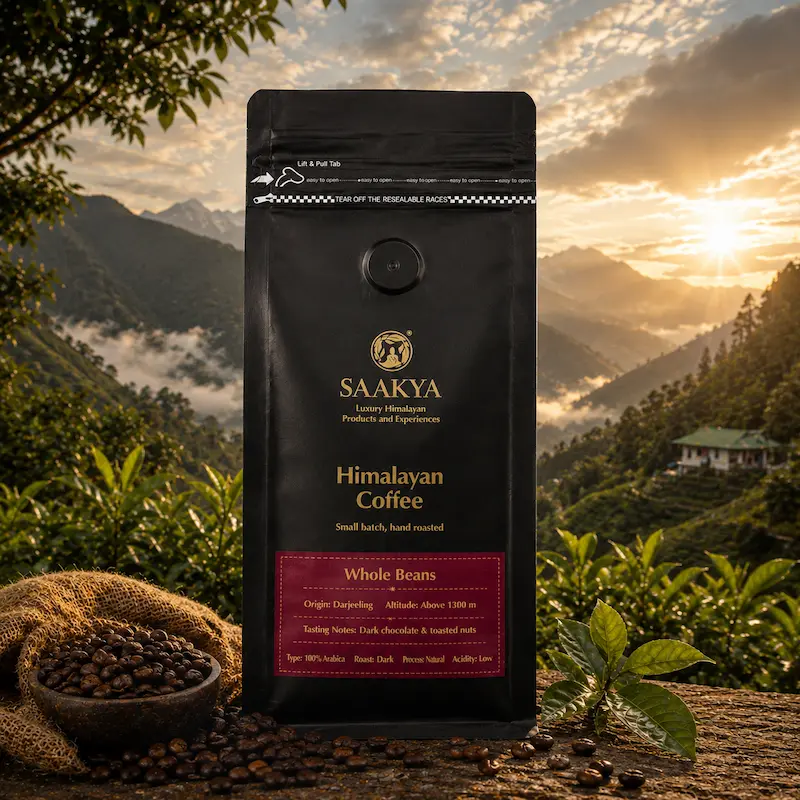
Saakya Himalayan specialty coffee whole bean bag — single origin Arabica from Kalimpong Darjeeling

Frequently Asked Questions About Coffee Beans

What are the 4 types of coffee beans?
The four main types of coffee beans are Arabica, Robusta, Liberica, and Excelsa. Arabica accounts for roughly 60–70% of global production and is prized for its smooth, complex, and nuanced flavour. Robusta makes up most of the remainder and is known for its bold bitterness, high caffeine content, and use in espresso blends and instant coffee. Liberica represents less than 2% of global production and has a distinctive woody, smoky, floral character. Excelsa — technically a Liberica variety — is rare and used primarily in blending for complexity.
What is the difference between Arabica and Robusta coffee beans?
Arabica coffee beans are smooth, sweet, and complex with bright acidity and lower caffeine content. They grow best at high altitudes (600–2,000+ metres) and are used in specialty and premium coffee. Robusta beans are bold, bitter, and earthy with nearly twice the caffeine of Arabica. They grow at lower altitudes, are more resilient and higher-yielding, and are used in espresso blends, instant coffee, and budget commercial coffees. For flavour nuance and drinking pleasure, Arabica is the preferred choice.
Which type of coffee bean is best?
For most coffee drinkers — especially those who enjoy nuanced, flavour-forward coffee — high-quality Arabica is the best coffee bean. Specifically, single-origin specialty-grade Arabica from high-altitude regions offers the most complex and enjoyable drinking experience. Robusta suits those who want maximum caffeine or are blending for espresso. The best bean ultimately depends on your taste preferences, brewing method, and the quality of the specific coffee you are buying.
What is specialty coffee and how is it different from regular coffee?
Specialty coffee is a quality classification used by the Specialty Coffee Association (SCA) — any coffee scoring 80 or above on a 100-point cupping scale qualifies. Specialty coffee uses high-grade Arabica beans, typically from specific single origins, carefully processed and freshly roasted in small batches. It is distinct from commercial or commodity coffee, which prioritises volume, consistency, and price over flavour complexity. Saakya’s Himalayan coffee is specialty grade, with cupping scores above 84 from the Coffee Board of India.
Is Indian coffee good quality?
Yes — Indian coffee is of excellent quality, particularly from established regions like Coorg and Chikmagalur in Karnataka, and increasingly from the Himalayan regions of Darjeeling and Kalimpong. Indian Arabica, especially shade-grown and naturally processed high-altitude varieties, has earned recognition in international specialty coffee circles. The Himalayan coffee region is particularly exciting — pioneer farmers in Kalimpong and Darjeeling are producing specialty-grade Arabica with cupping scores above 84, featuring tasting notes of stone fruit, florals, and mixed berries.
What is Himalayan coffee and where does it come from?
Himalayan coffee refers to Arabica coffee grown in the high-altitude hills of the Eastern Himalayan region — primarily Darjeeling and Kalimpong in West Bengal, India. Grown above 1,300 metres in cool, misty conditions under shade, these beans develop slowly, resulting in a complex flavour profile that includes stone fruit, florals, toasted nuts, and warm spice. It is one of India’s most exciting emerging specialty coffee origins. Saakya sources directly from these Himalayan farms, working with pioneer farmers who are establishing this region on the global specialty coffee map.
What is the best coffee bean for pour-over brewing?
Light to medium roast, high-quality Arabica beans from a single origin are ideal for pour-over brewing methods like V60, Chemex, or Kalita Wave. Pour-over extracts the delicate, nuanced flavours of the bean clearly — which is why this brewing method rewards the most complex and well-sourced beans. Himalayan Arabica, with its stone fruit and floral notes, is particularly well-suited to pour-over.
Should I buy whole bean or ground coffee?
Whole bean coffee is almost always the better choice for freshness and flavour. Coffee begins losing aromatic compounds within minutes of grinding, so buying whole beans and grinding fresh before brewing delivers a noticeably superior cup. Whole beans also allow you to control grind size to match your brewing method — essential for espresso (fine), pour-over (medium-fine), or French press (coarse). If you do not have a grinder, choosing freshly ground coffee from a specialty roaster that grinds to order is the next best option.

Your Best Cup Starts with the Right Bean

100% Arabica. Specialty grade. Shade-grown above 1,300 metres in Darjeeling & Kalimpong. Freshly roasted in small batches. Traceable to source.

Final Thoughts — The Bean Is Where Great Coffee Begins

Understanding the types of coffee beans transforms the way you experience coffee. It moves you from passive consumption to active appreciation — from drinking whatever is on the shelf to choosing a bean, an origin, a process, and a story.

The difference between a mass-market commercial blend and a freshly roasted, single-origin specialty Arabica from the Himalayas is not subtle. It is the difference between coffee as a caffeine delivery mechanism and coffee as a genuine sensory experience.

Whether you are just beginning to explore specialty coffee or deepening an existing interest — start with the bean. Choose Arabica. Choose high altitude. Choose single origin. And if you want to experience one of India’s most exciting emerging coffee origins, start with the Himalayas.
S
Saakya
Saakya sources specialty-grade Arabica coffee from pioneer farms in the Eastern Himalayas — Darjeeling and Kalimpong — and crafts natural incense sticks and fruit concentrates rooted in Himalayan botanical tradition. saakya.co.in

Leave a Comment