“In the Himalayas, every moment has a fragrance. The pine at dawn. The damp earth after rain. The warm spice of evening fires. These are not just smells — they are anchors to presence.”
At Saakya, we believe that ritual is not reserved for temples or special occasions. It lives in the small, intentional moments of an ordinary day — the first breath of morning incense, the deliberate pause before work begins, the quiet of an evening that belongs only to you. This is what we mean by the Himalayan Ritual. Not ceremony. Just presence, practised daily.
This guide walks you through a full day of Himalayan ritual — from the first light of morning to the stillness before sleep — with Saakya’s natural incense at the centre of each moment. Grounded in India’s ancient relationship with fragrance, written for the modern Indian home.
Why Fragrance Is the Oldest Form of Ritual
Before meditation apps, before wellness retreats, before the word “self-care” existed — there was incense. The burning of aromatic herbs, resins, and wood to mark a moment, to shift an atmosphere, to signal to the body and mind that something is about to change. This practice predates recorded history in India, woven into Vedic tradition, Ayurvedic medicine, and the daily rhythms of homes from Kashmir to Kanyakumari.
What the ancients understood intuitively, modern neuroscience now confirms: scent is the only sense with a direct pathway to the limbic system — the part of the brain that governs emotion, memory, and the stress response. A fragrance can calm the nervous system in seconds. It can retrieve a memory instantaneously. It can shift your state of being before a single conscious thought occurs.
This is why incense works as ritual. Not because it is spiritual, though it can be. But because fragrance speaks to the body before the mind — and the body, in summer heat and modern stress, needs that conversation more than ever.
The Full Day Himalayan Ritual — An Overview
A ritual does not need to take hours. The most powerful rituals are brief, consistent, and intentional. Here is how a full day of Himalayan ritual looks — each moment anchored by a specific Saakya fragrance chosen for what that hour demands of mind and body.
The Morning Ritual — 5:30 AM to 8 AM
The Himalayan morning begins before the city does. In the foothills of Darjeeling and Kalimpong, the first hour belongs to mist, birds, and the resinous cold of pine forests before the sun touches them. This is what Saakya’s morning incense is built to evoke — not transport you somewhere else, but remind your body of a pace it already knows and has simply forgotten.
Before meditation, before tea, before the first thought of the day takes hold — light one stick. Pine from the high cedar forests of the Eastern Himalayas is one of the most clarifying fragrances in nature. Cold, resinous, and unmistakably alive. It does not ask you to feel anything. It simply clears the air — literally and neurologically.
In Ayurvedic tradition, the early morning is governed by vata energy — light, mobile, and easily disturbed. A grounding, earthy-fresh fragrance like pine or juniper settles the nervous system before the day’s stimulation begins. Think of it as the olfactory equivalent of washing your face — a simple act of clearing the slate.
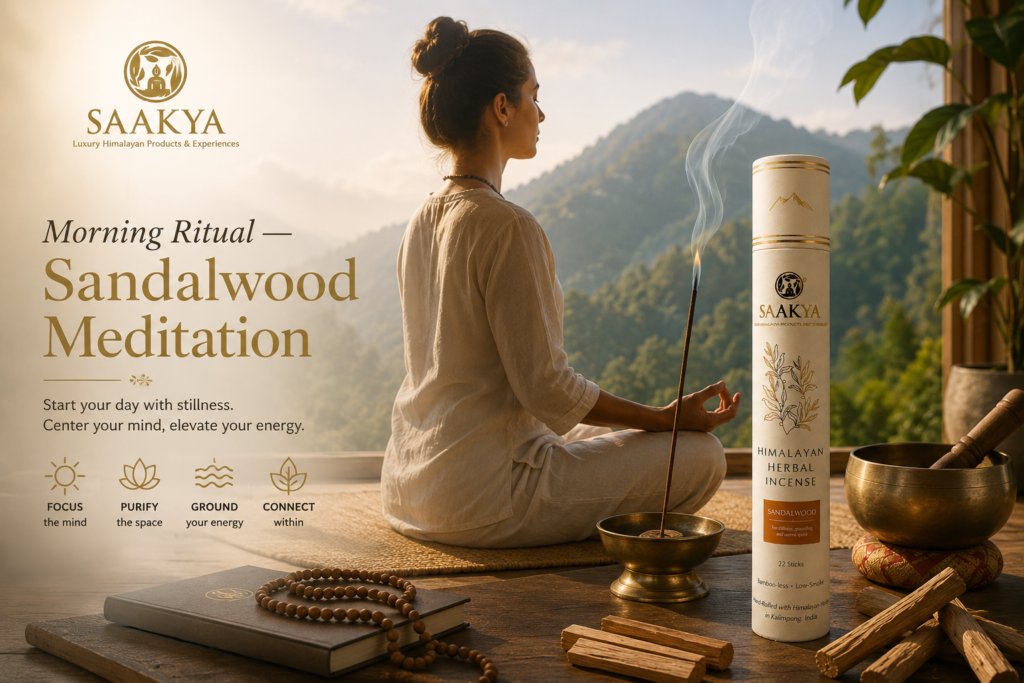
Sandalwood is the oldest meditation fragrance in India — used in temples, gurukuls, and homes for over 4,000 years. There is a reason it has endured: nothing grounds the wandering mind more effectively during sitting practice than the warm, creamy, slightly sweet presence of true sandalwood.
Light one stick before you sit. Do not try to meditate. Simply sit with the fragrance — follow the thin thread of smoke with your eyes, let the scent fill the room, and notice how the quality of stillness changes. The sandalwood is not an accessory to your meditation. For those first minutes before the mind settles, it is the meditation.
- 1Open a window slightly — even 2–3 cm. The morning air and the incense fragrance should move together, not compete.
- 2Light Pine incense first — place the holder where you will sit and allow 2 minutes for the fragrance to settle into the room before you enter it.
- 3Sit in your chosen spot. No phone. No expectations. Five minutes of stillness with the pine fragrance is enough to set the tone for the entire morning.
- 4For meditation: light Sandalwood and sit for your usual practice. Let the stick burn through the session — when it finishes, your session finishes. No timer needed.
- 5After meditation: make your morning drink. Hold the warmth of the cup. The morning ritual is complete.
The Midday Ritual — 12 PM to 1 PM
By noon, the Indian summer is at its most demanding. The body is hot, the mind is full, and the temptation is to push through — to eat at the desk, to skip the pause, to treat the afternoon as an obstacle between morning and evening. The midday ritual is a counterargument to all of that. It takes four minutes. It changes the entire quality of the afternoon.
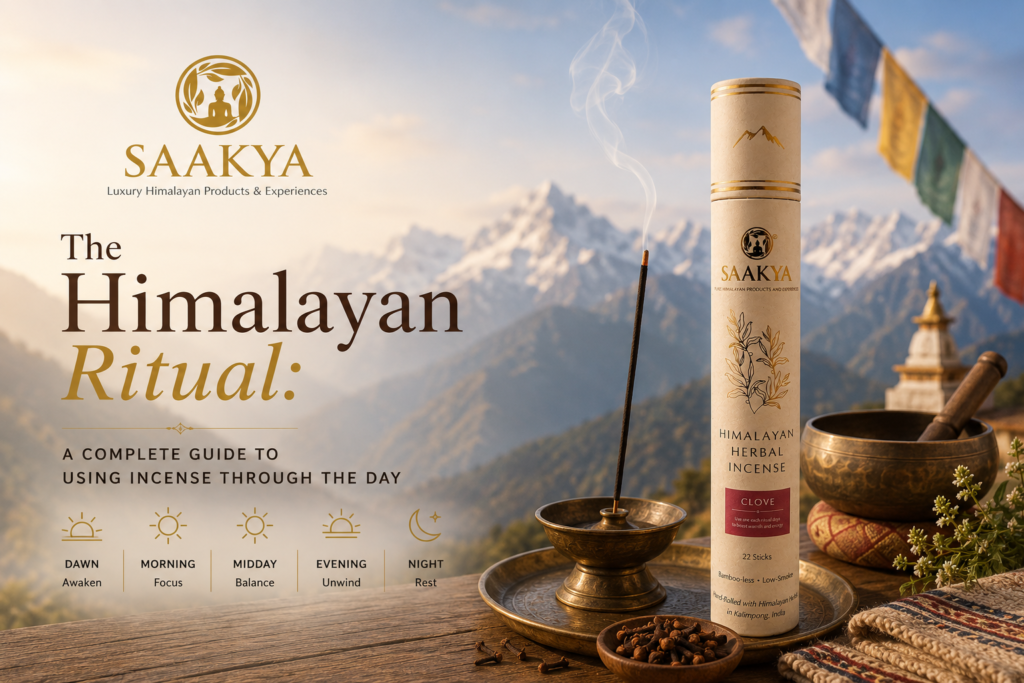
Clove is one of the most cognitively activating fragrances in Ayurvedic tradition — warming, stimulating, and deeply grounding at the same time. In the sluggish heat of an Indian summer afternoon, it cuts through mental fog like nothing else. Not with the sharp jolt of caffeine, but with the slow, warm clarity of spice.
Vetiver — the root of a grass grown in the plains of India — is the opposite in character: cool, earthy, and deeply calming. Where clove sharpens, vetiver settles. Choose based on what the afternoon demands. A high-focus work session calls for clove. An afternoon that needs patience and steadiness calls for vetiver.
Light one stick. Step away from your screen for the time it takes to light it, breathe three times slowly, and return. That is the whole ritual. Four minutes. The fragrance will linger for two hours.
The Evening Ritual — 5 PM to 9 PM
Evening is where the Himalayan ritual finds its fullest expression. In the hills, this is the hour when the day cools, the light turns golden, and the world becomes audible again after the white noise of afternoon heat. In the modern home — wherever it is — this hour can carry the same quality, if you let it. The transition ritual is how you let it.
There is a moment every day when work should end and life should begin. Most people miss it — sliding from laptop to phone to dinner without any conscious break, carrying the texture of the workday into the evening without realising it.
The evening transition ritual creates that break deliberately. Frankincense — one of the world’s oldest sacred fragrances, used across every major spiritual tradition — signals this shift better than any other scent. Its deep, balsamic, slightly citrus-resinous character is simultaneously activating and calming: it does not put you to sleep, but it releases the grip of the day.
Light one stick of Saakya Frankincense or Resin incense as you close your laptop. Do not check your phone for the time it takes for the first thread of fragrance to reach you. That pause — between the last work thought and the first personal one — is the transition ritual. Brief. Intentional. Transformative over time.
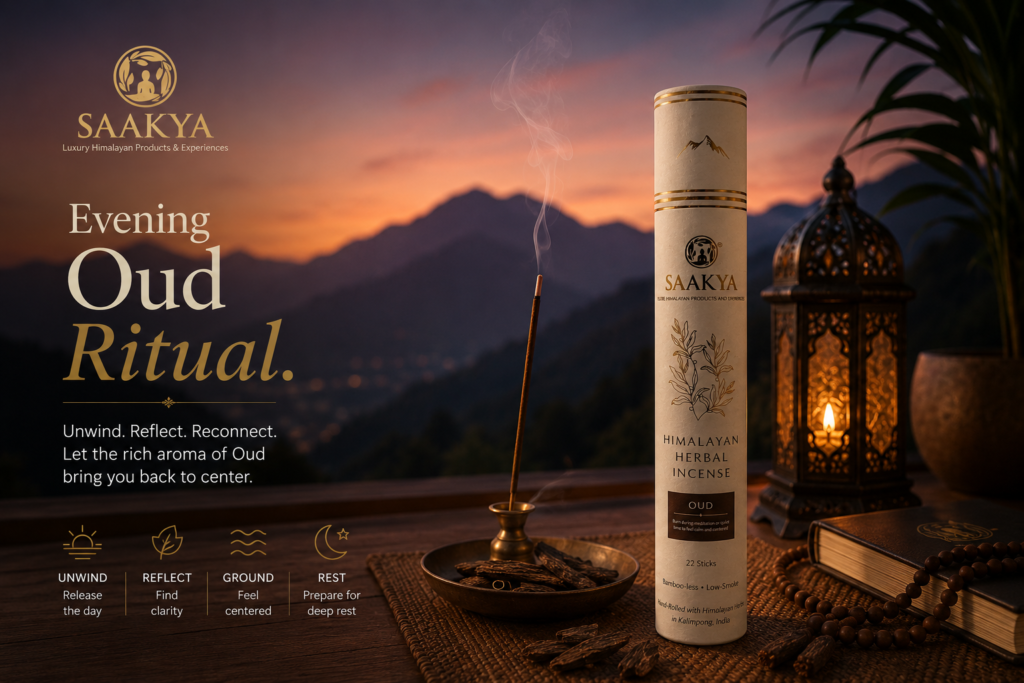
Oud is the most extraordinary fragrance in the world — and not by cultural consensus alone. Agarwood (Aquilaria) produces its aromatic resin only in response to a specific infection, which means every piece of true oud carries within it the record of a struggle, a transformation, and a survival. This is what gives it its depth — warm, complex, simultaneously earthy and sweet, evolving across the hour it burns.
The evening oud ritual is not about luxury, though oud is among the world’s most prized aromatic materials. It is about what the fragrance does: it slows time. The richness of oud demands a certain quality of attention — you cannot rush through a room where oud is burning and remain unchanged by it. It invites you to settle, to stay, to be present in the evening rather than passing through it on the way to sleep.
Light oud during dinner — not to perfume the food, but to fragrance the act of eating together. Or during a quiet hour of reading, journalling, or simply sitting. Oud is for the hours that deserve to be remembered.
- 1At 5 PM or when work ends: light Frankincense. Close the laptop. Put the phone face down. Sit with the fragrance for three minutes — just three.
- 2Change your clothes if you can — the physical act of changing signals the transition as powerfully as the fragrance.
- 3At dinner or the quiet evening hour: light Oud. Dim any harsh overhead lights if possible. The room will feel different within minutes.
- 4Do not multitask while oud burns. This is not a rule — it is just that you will find you do not want to. The fragrance creates a quality of presence that makes distraction feel like a loss.
- 5Allow the stick to burn through completely. The lingering fragrance after the stick finishes is often the most beautiful part — quieter, warmer, entirely its own.
The Night Ritual — 9 PM to Sleep
The most neglected ritual of the day is also the most important: the deliberate preparation for sleep. In a world of screens, late notifications, and the ambient anxiety of always-on connectivity, sleep has become something that happens to us rather than something we enter intentionally. The night ritual changes this — not with discipline, but with fragrance.
Rose has been used as a sleep-supporting fragrance in both Ayurvedic and Unani traditions for centuries. Its gentle, floral sweetness is calming without being soporific — it does not make you sleepy, but it creates the conditions in which sleep comes more easily. In the language of Ayurveda, rose pacifies vata and pitta — the energies most likely to be disturbed after a full day of heat and activity.
Herbal incense blends — containing calming botanicals like vetiver, valerian root, and mountain herbs — work similarly, with a more earthy, grounded quality suited to those who find floral scents too delicate for the end of the day.
Light your night incense 30 minutes before you intend to sleep. Allow the fragrance to fill the room. Put away the phone. Read, stretch, or simply sit. By the time the stick finishes burning, the room will have changed — and so will you.
Why the Quality of Incense Changes Everything
Ritual requires trust. When you light incense as part of a deliberate practice — as an anchor for meditation, a marker of transition, a companion to sleep — you are placing a degree of faith in what you are burning. Mass-market agarbatti, made with charcoal, synthetic fragrance, and bamboo core, cannot hold that trust. It delivers scent, but not the botanical interaction with the nervous system that makes ritual incense genuinely transformative.
This is the entire reason Saakya’s incense exists.
Frequently Asked Questions About Himalayan Ritual Incense
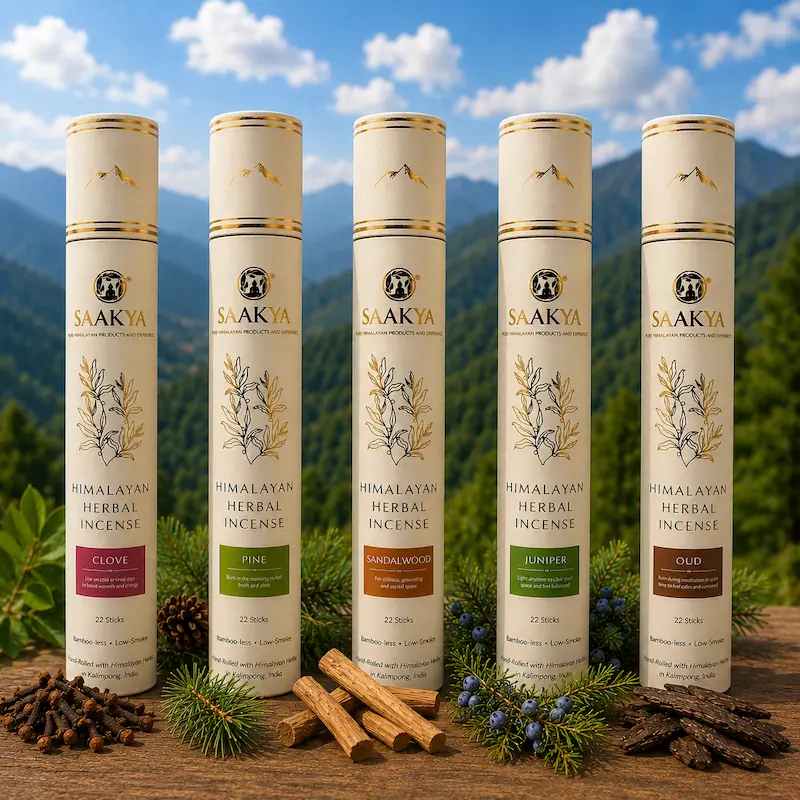
The Himalayan Ritual. Every Day.
Pine at dawn. Sandalwood for stillness. Clove for focus. Frankincense at the threshold. Oud for evenings worth staying in. Rose for the quietest hour. Six fragrances. One full day. One way of living.
A Final Word — On Beginning
The Himalayan Ritual is not something you complete. It is something you begin — and then begin again, each morning, with the same small act: a match, a breath, a fragrance rising in the quiet.
It does not require a dedicated meditation room, a particular spiritual practice, or any belief beyond the simple recognition that your days deserve more intention than they usually receive. It requires only a few minutes, a quality stick of incense, and the willingness to treat the ordinary moments of your day as if they matter.
Because they do. The morning matters. The pause at noon matters. The transition from work to home — even when work and home are the same room — matters. The evening you give yourself matters. The quality of quiet before sleep matters.
Saakya makes incense for all of these moments. Crafted in the Himalayas, from the Himalayas, for lives lived anywhere — but lived with intention.
The ritual begins when you light the first stick. Begin today.